
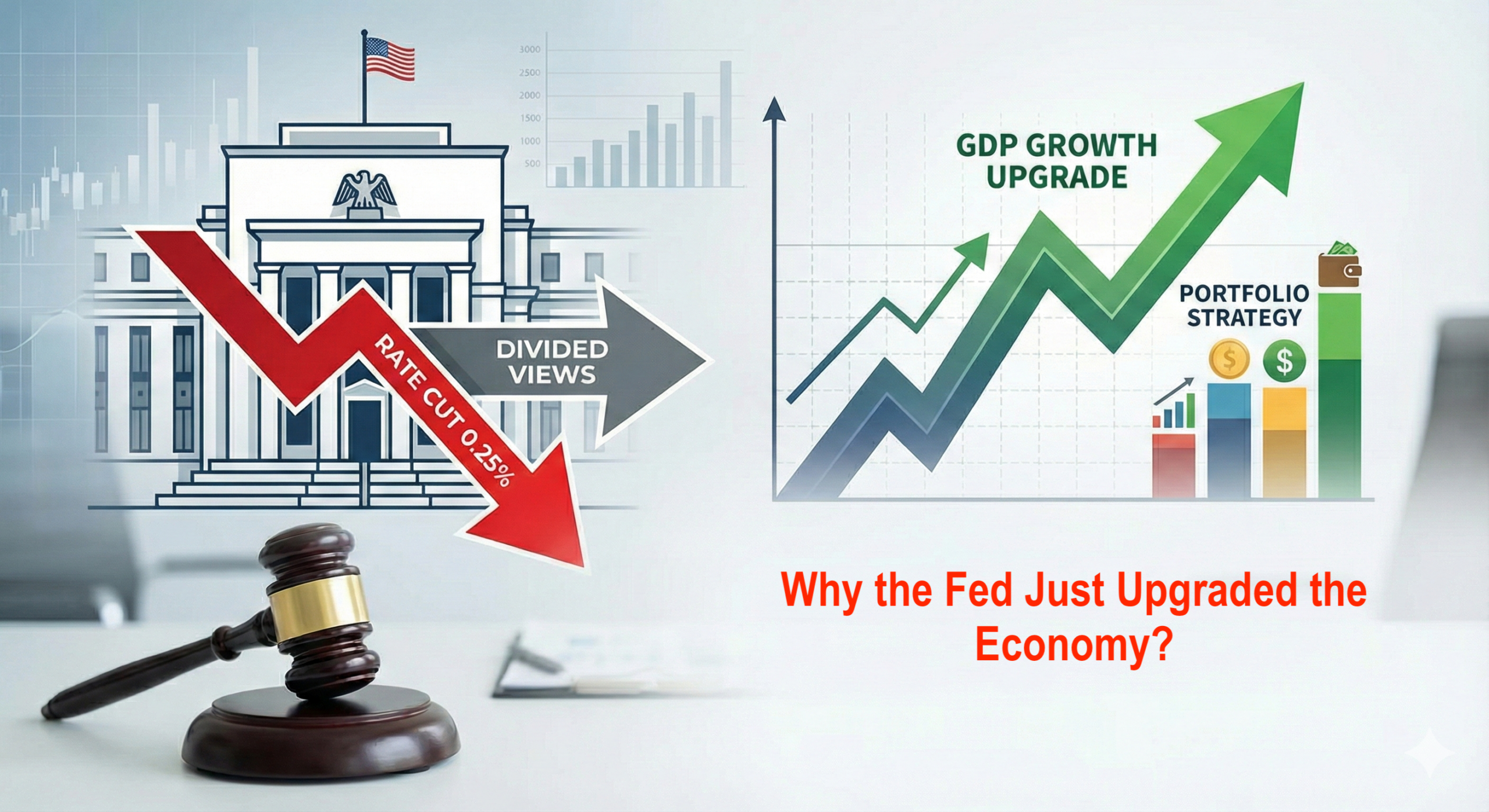
Understanding the full Fed rate cut impact goes beyond just seeing a 0.25% drop in interest rates. If you only read the headlines today, you might miss the bigger picture. As a Financial Planner, I look past the immediate numbers to find the real narrative.
The latest FOMC meeting revealed a rare three-way split in votes. It also included a surprising upgrade to economic projections. These factors significantly change the long-term Fed rate cut impact for investors. Here is my analysis of the outcome and the strategic moves you should make.
The Fed Rate Cut Impact and the Rare Split Vote
The Federal Reserve lowered the federal funds rate to a range of 3.50%–3.75%. While a cut usually signals consensus, this decision was divided. The voting record revealed three different opinions:
- The Majority: Voted for the 0.25% cut to manage inflation.
- The Dove: Wanted a deeper 0.50% cut to protect jobs.
- The Hawks: Wanted no cut at all, citing sticky inflation.
This dissent proves that uncertainty is high. Consequently, the Fed rate cut impact is not just about cheaper money. It is a signal that the central bank is navigating a “fog” of conflicting data.
How the Fed Rate Cut Impact Changes with GDP Data
Alongside the decision, the Fed released its Summary of Economic Projections (SEP) [Link to Fed Report]. This data shifts the narrative completely. Despite the caution in the room, the Fed has upgraded its view of the US economy for 2026.
- GDP Growth: In September, they expected 1.8% growth. Now, they forecast a robust 2.3%.
- Recession Risk: The fear of a hard landing has evaporated.
This upgrade alters the expected Fed rate cut impact on your wealth. It suggests that while rates will come down, they will stay “higher for longer.” The “Dot Plot” implies the benchmark rate will settle around 3.4% by the end of 2026.
Navigating the Fed Rate Cut Impact in Your Portfolio
At Millionsworth, we believe in process over prediction. However, this new landscape requires a review of your “Perfect Plan.” Here is how to handle the Fed rate cut impact across different asset classes:
- Equity Portfolio Strategy: The GDP upgrade to 2.3% is excellent news. A growing economy drives corporate earnings. The positive Fed rate cut impact here is that recession risks have faded, favoring a diversified equity allocation.
- Fixed Income Strategy: With rates projected near 3.4%, yields won’t crash overnight. The strategic Fed rate cut impact for debt investors is that “easy money” in savings accounts will dry up slowly. You should lock in duration now before yields drift lower.
- Managing Volatility: The split vote guarantees market swings. Investors know the Fed is undecided, which may cause short-term reactions to news.
Conclusion
The economy is resilient, but the Fed is cautious. This is not the time for ad-hoc decisions. To truly benefit from the current Fed rate cut impact, you need a robust, process-driven asset allocation.
Markets fluctuate. A strategic plan endures.
Is your portfolio aligned with this new economic cycle?